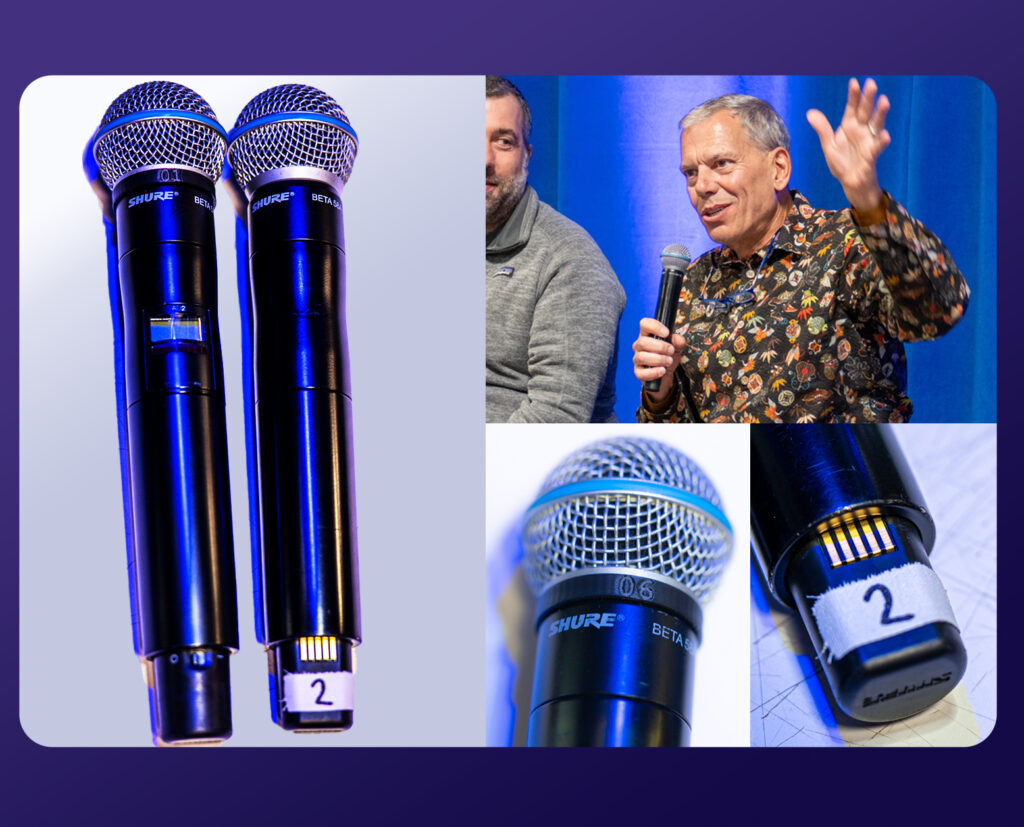
A strip of tape on a wireless mic might not seem like a big deal.
Until that mic is clipped to a presenter, captured in a tight camera shot, and projected onto a screen for everyone in the room to see.
For event marketers, agencies, and corporate teams, an event is built from hundreds of details the audience will never consciously notice.
The microphones are ready, handoffs are smooth and presenters feel prepared. Nothing pulls attention away from the message, the brand, or the people on stage.
That kind of seamless experience doesn’t happen by accident. It comes from the behind-the-scenes planning that keep a show organized before the first cue is called, and sometimes, it comes from solving a problem that most people outside production would never even think about.
Rethinking the Small Details: A Cleaner Way to Label Wireless Mics
For a simple panel, tracking a few microphones is easy enough. But scale that up to a general session, awards program, or multi-presenter conference, and the number of wireless units can grow quickly. We’re talking 8, 16, or even 32+ mic packs that need to be assigned, tracked, handed off, and identified throughout the day.


The practical need is straightforward: every mic needs to be clearly labeled.
The challenge is making that labeling system clean, functional, and camera-friendly.
For many production teams, a piece of gaff tape and a marker solves the immediate problem. The mic is labeled, the crew can identify it, and everyone moves on to the next task.
But VCI’s team is often thinking one step further: not only does the system work backstage, but how does it look in the room, on camera, and on a large screen? That extra layer of consideration is where small production choices start to support the larger event experience.
Tape has traditionally been the go-to answer. It works, but it has its drawbacks. Labels wear down. They leave residue on gear. And on events with close-up shots, livestreams, or IMAG projection, a taped-on number can become a small but noticeable visual distraction, the kind that pulls an audience member’s eye at exactly the wrong moment.
For event teams, those are the kinds of details that help a show feel more cohesive, organized, and intentional.
Built to Work Backstage and Look Clean On Camera
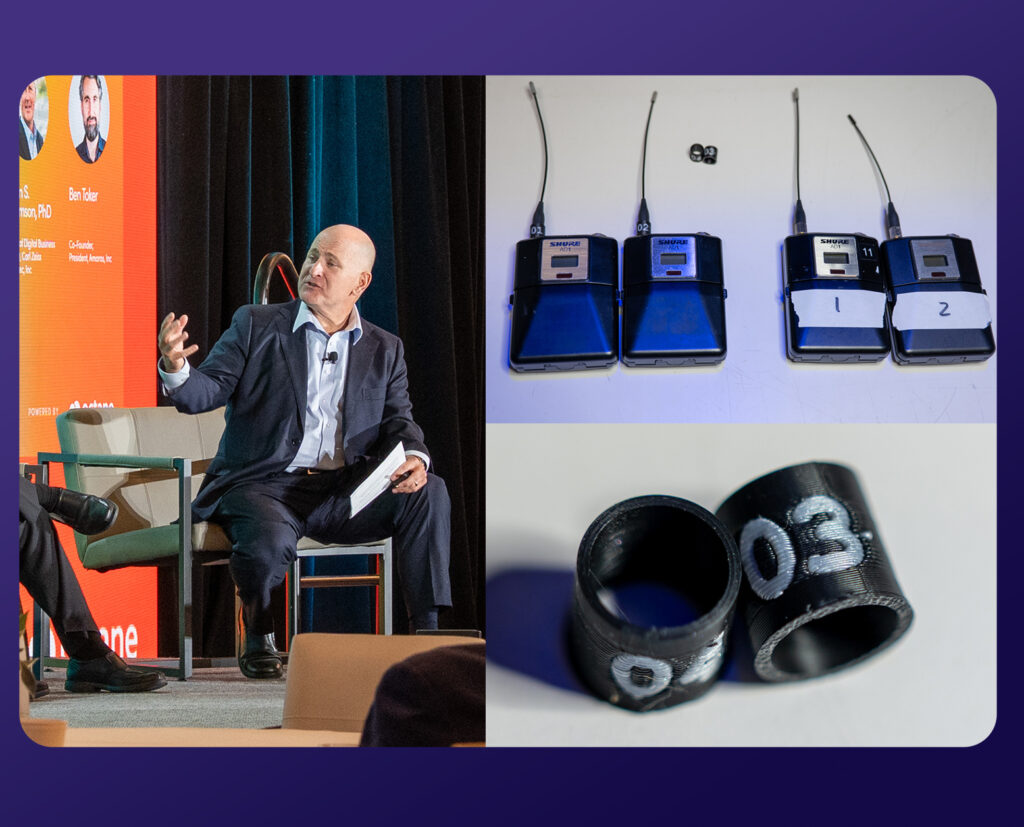
To improve the process VCI’s Christian Galindo, Lead Return and Operations Technician, designed and 3D-printed custom number tags for VCI’s wireless microphone system. Working alongside Brett Drolet, VCI’s Audio Department Manager, Christian has worked to refine the system around real on show-site conditions. These small, discreet printed rings allow each mic pack to be clearly identified, no tape, no residue, no visual clutter.


For the crew, that means faster identification and cleaner organization during a busy show day. For our partners it means microphone labels stay subtle on camera, helping presenters look clean and intentional without visible strips of tape pulling focus.
Details as small as tape matter when cameras are tight on presenters, microphones are moving between hands, and the team backstage needs to know exactly what mic is where. Something as simple as a number on a mic can make a real difference, even if the audience never consciously notices.
Why Small Details Matter on a Live Event
When a show is live, small inefficiencies compound quickly. A clear labeling system reduces confusion, supports faster mic handoffs, and helps keep the program moving on schedule. It also reduces wear on the equipment by eliminating repeated tape application and the residue cleanup that comes with it.
That’s what meticulous project management can look like in practice: A cleaner labeling system keeps the practical organization the crew needs while staying invisible to everyone else. 3D-printed mic tags are one small example of that mindset in action: noticing a recurring challenge and building a more elegant way to solve it.
For corporate events, what the audience sees, even peripherally, can shape how intentional events feel. A taped-on number may seem inconsequential backstage, but on camera or projected on a large screen, it can subtly undermine the professional feel of the presentation.